Tariffs Are Falling—But 90% of Indian Exporters Still Can’t Enter Global Market Access. Here’s Why.

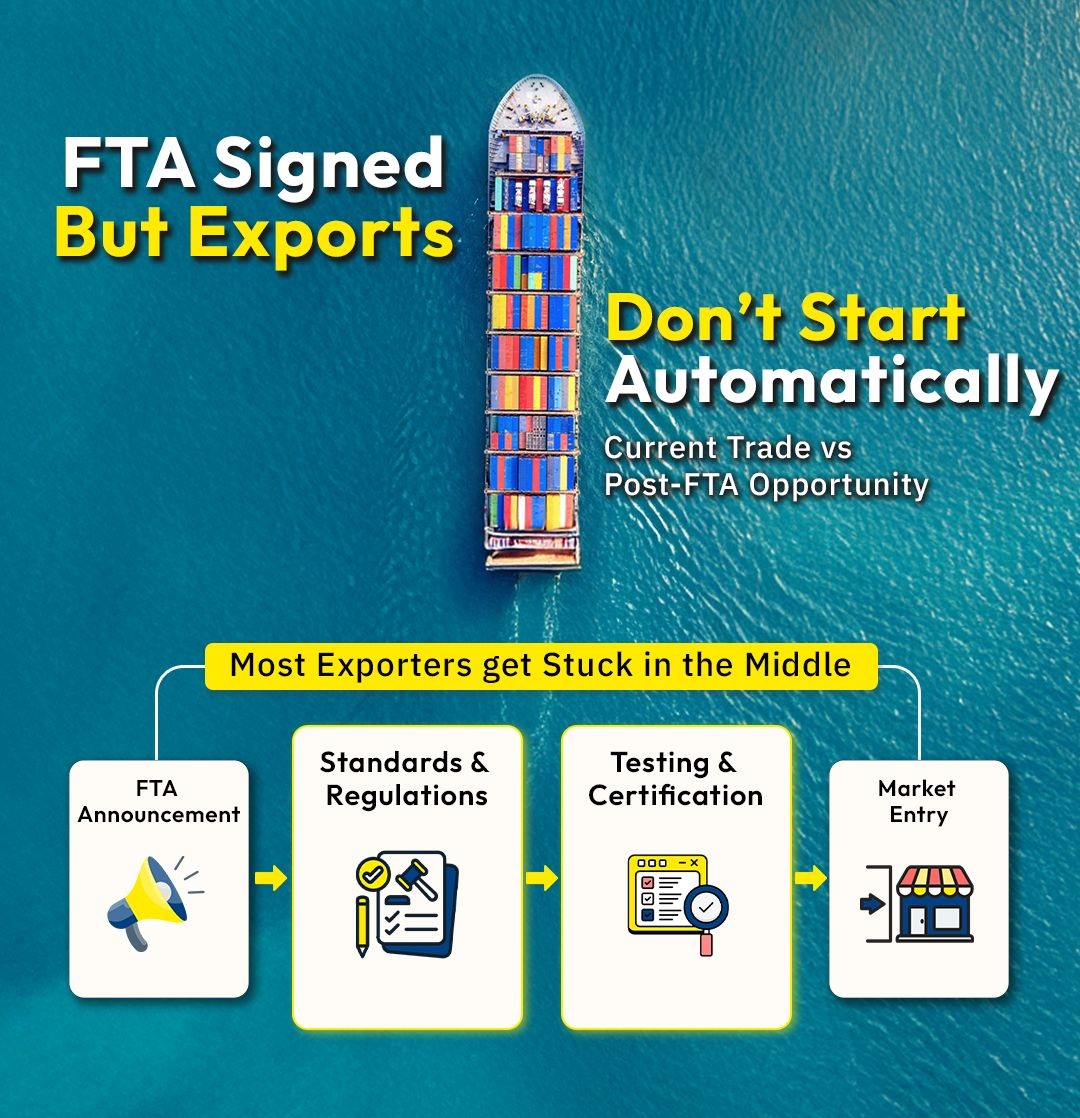
The next phase of global trade isn’t defined by where you export—it’s defined by whether you are truly ready for Global Market Access. As tariffs fall and trade corridors expand, success in international markets now depends less on geography and more on regulatory preparedness, technical compliance, and conformity with destination-market standards.

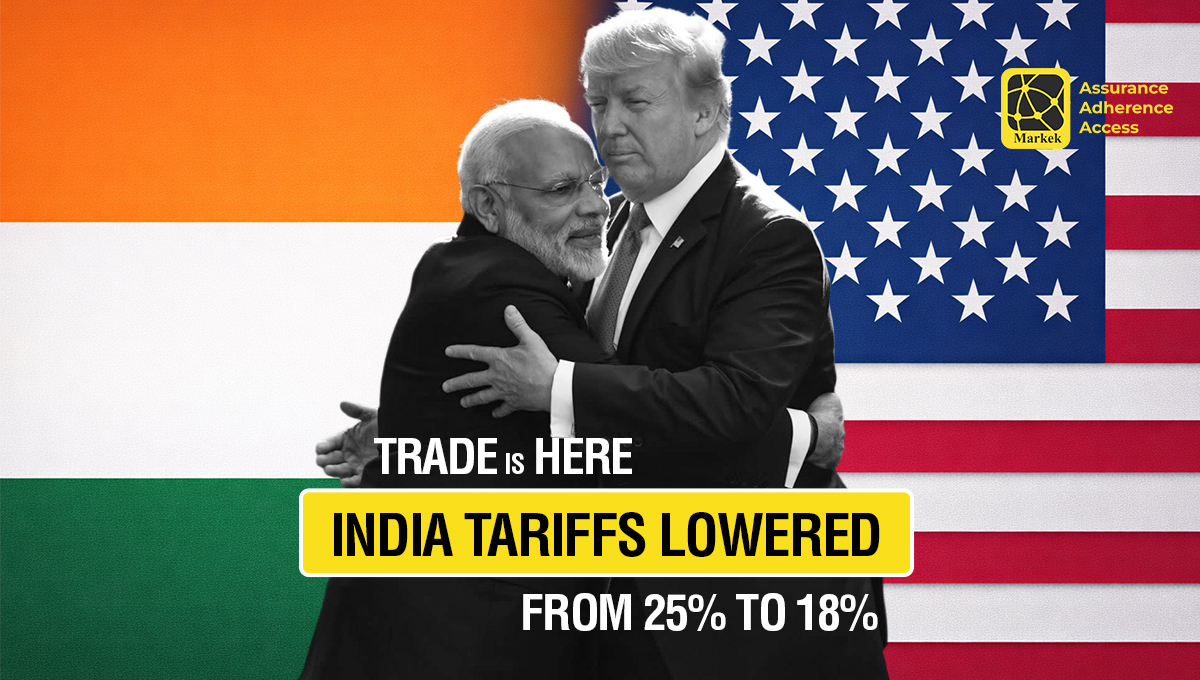
Over the past few years, India has aggressively expanded its global trade footprint through strategic Free Trade Agreements (FTAs) and bilateral trade deals. From the UAE to Australia, and with advanced negotiations underway with the UK and EU, tariff reductions are creating powerful new opportunities for Indian manufacturers.

On paper, it looks like a golden era for Indian exports.

But here’s the reality most businesses overlook:

Lower tariffs do not automatically mean easier market entry.

The Illusion of Market Access

When a new trade agreement reduces import duties, it grabs headlines. Industries celebrate. Export projections rise.

However, tariff access and market access are two completely different things.

Even with zero or reduced tariffs, exporters must still meet:

  • Technical regulations
  • Product certifications
  • Safety standards
  • Environmental compliance
  • Labeling and packaging norms
  • Conformity assessments

These are the real gatekeepers.

If your product doesn’t meet destination-market regulations, it doesn’t matter how low the tariff is—your shipment will be stopped, rejected, or delayed.

How Recent FTAs Are Reshaping Global Opportunities

India’s recent and upcoming trade agreements are especially promising for sectors such as:

  • Engineering goods
  • Chemicals
  • Textiles and apparel
  • Gems and jewellery
  • Processed food and seafood
  • Electronics and consumer products
  • Auto components

These industries are seeing reduced duties across key global markets, significantly improving price competitiveness.

But price advantage is only half the equation.

Global buyers today operate in highly regulated ecosystems. Whether it’s CE marking in Europe, GCC certification in the Middle East, FDA compliance in the United States, or product testing standards in Australia—regulatory alignment is mandatory.

The opportunity exists.

The question is: Are manufacturers prepared?

Compliance Is the New Competitive Advantage

In the emerging trade environment, compliance is no longer a back-end operational task. It is a front-line growth strategy.

Companies that proactively prepare for regulatory requirements will:

  • Enter markets faster
  • Avoid shipment rejections
  • Reduce compliance-related delays
  • Build stronger buyer confidence
  • Establish long-term global credibility

Meanwhile, those who treat compliance as an afterthought risk losing the advantage that trade agreements were designed to create.

Global trade is becoming standards-driven, not tariff-driven.

The Shift From “Can We Export?” to “Are We Export-Ready?”

Export readiness today means:

  • Understanding destination-market regulations
  • Aligning product specifications with international standards
  • Securing mandatory certifications
  • Preparing proper documentation
  • Ensuring traceability and testing protocols
  • Maintaining ongoing regulatory monitoring

This structured approach separates serious global brands from opportunistic exporters.

As trade corridors expand, regulatory scrutiny also intensifies. Countries protect consumers, industries, and environmental standards through strict technical requirements.

Access is available—but only to those who qualify.

Introducing a Structured Approach to Global Entry

Recognizing this shift, Markek is introducing Global Market Access (GMA)—a structured framework designed to help manufacturers and brands:

  • Assess export readiness
  • Identify destination-market regulatory requirements
  • Plan certification pathways
  • Implement compliance systems
  • Enter international markets with confidence

Global Market Access is not about reacting to regulations. It’s about preparing for them strategically.

Because in modern global trade, opportunity created by trade agreements is realized only through compliance.

Final Thought

The next phase of global trade isn’t about geography.

It’s about preparedness.

FTAs are reducing tariffs. Markets are opening. Demand is rising.

But the companies that win will be those who understand one critical truth:

Market access is earned through regulatory readiness.

Global Market Access by Markek—Announcing soon.

News & Update

View all
View all

Need Guidance on Certification Requirements?

Connect with our specialists to identify which certifications your product needs and how to achieve them quickly and cost-effectively.
Book a ConsultationContact Us

I am a heading

Here goes your text ... Select any part of your text to access the formatting toolbar.