FTA Signed? Why Indian Exporters Still Struggle with Market Access
In today’s rapidly evolving global trade landscape, new FTA agreements are being...
Get a Free Business Compliance Audit Today

Most exporters believe global expansion fails because markets are difficult to enter.
That’s comforting—but wrong.
In reality, companies don’t stall because demand is missing. They stall because their international market entry strategy is either incomplete, reactive, or built too late in the process.
And in today’s regulatory-first trade environment, that mistake is expensive.
If your expansion has slowed, approvals are dragging, or new markets feel unpredictable, the problem may not be your product.
It may be your strategy.
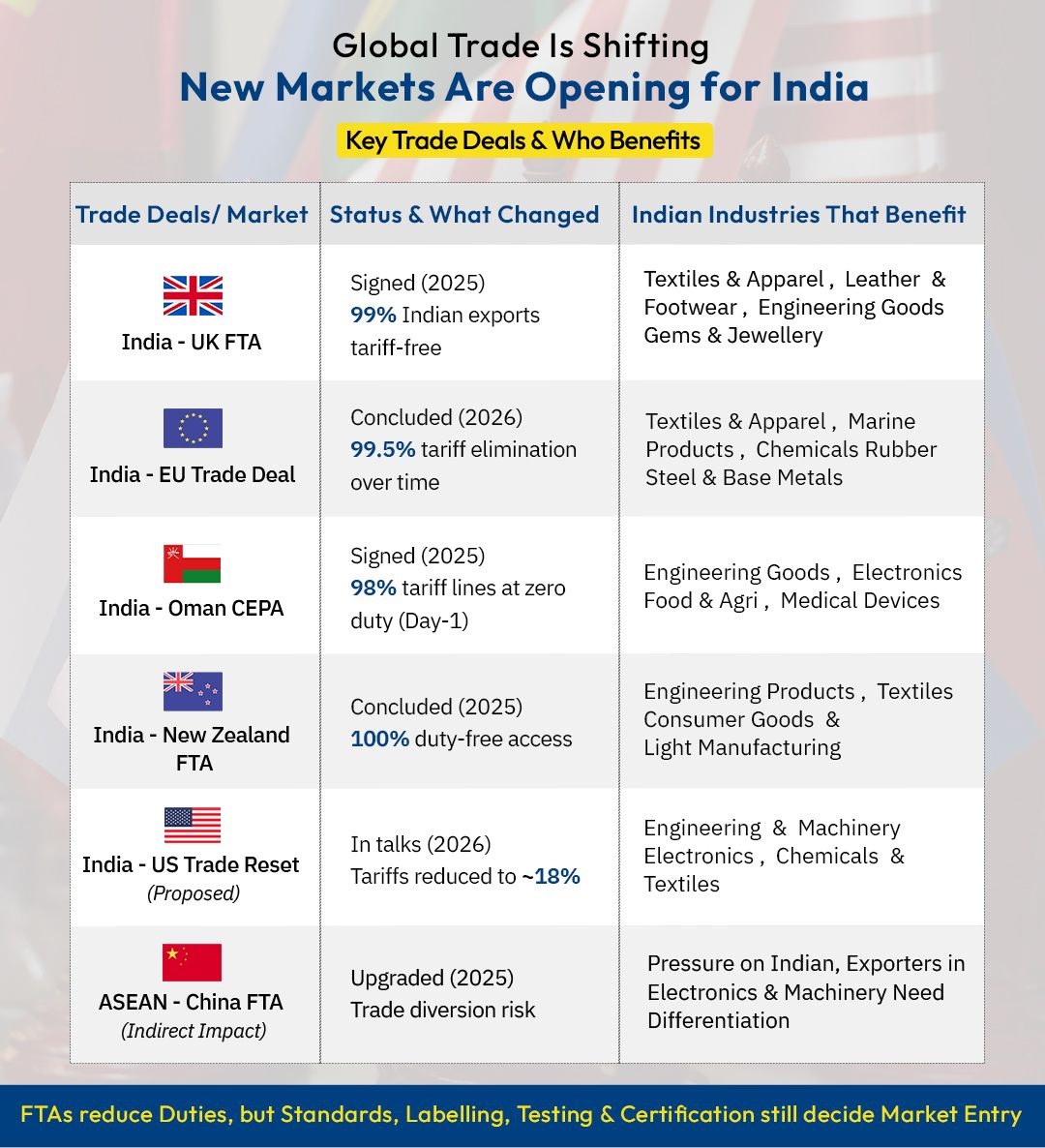
On the surface, global trade looks more open than ever:
Tariffs are declining.
Trade agreements are expanding.
Cross-border demand is rising.
Yet many capable exporters still struggle to scale internationally.
Why?
Modern trade no longer solely focuses on selling but also requires structured readiness.
An effective international market entry strategy today must align compliance, product design, documentation, and regulatory planning long before the first shipment moves.
Companies that miss this alignment often discover friction too late.
Many exporters follow a familiar but flawed sequence:
Identify opportunity.
Find buyers.
Start compliance later.
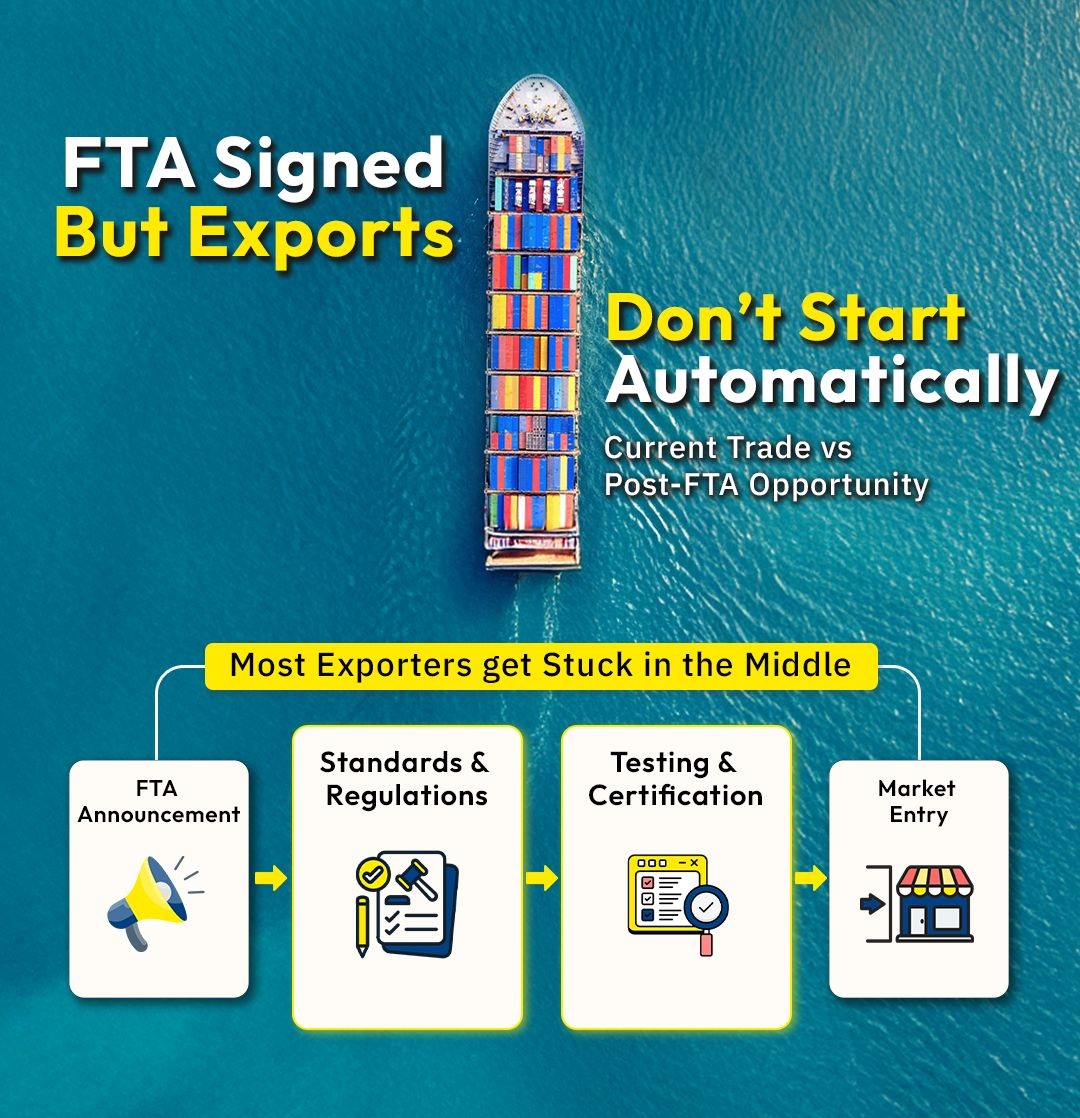
This reactive model creates bottlenecks—certification delays, testing gaps, labeling issues, and unexpected regulatory barriers.
A strong international market entry strategy flips the order.
It starts with regulatory clarity and builds outward toward sales and scale.
That shift alone can reduce time-to-market dramatically.
Companies that consistently enter global markets successfully tend to follow four disciplined principles.
Top exporters understand something critical:
Compliance is not paperwork—it is market access infrastructure. Instead of rushing certification at the end, they embed regulatory planning into product development. This makes their international market entry strategy faster, smoother, and more predictable. They ask early:
What standards apply?
What certifications are mandatory?
What testing is required?
What ongoing compliance must be maintained?
One of the costliest mistakes exporters make is product–market misalignment. When specifications don’t match destination requirements, companies face:
Redesign costs
Re-testing delays
Shipment holds
Lost buyer confidence
A mature international market entry strategy ensures that product engineering, labeling, and documentation are aligned with target markets from day one. This proactive approach removes last-minute surprises.
Many exporters unknowingly build themselves into a corner by optimizing for just one geography. But global trade rewards flexibility. Leading companies build their international market entry strategy with multi-market scalability in mind. They:
Map overlapping standards
Prioritize globally recognized certifications.
Create modular documentation.
Plan approvals that support future expansion
This reduces incremental effort when entering the next market.
Obtaining certification is only the beginning. The real challenge is maintaining compliance across time and markets. High-performing exporters treat their international market entry strategy as an ongoing operational discipline. They build systems for:
Renewal tracking
Regulatory monitoring
Documentation control
Audit readiness
Sustainability in global trade surpasses one-time success.
There is a persistent myth in the export ecosystem:
More certificates = easier market entry
In reality, the winners are not those with the most paperwork but those with the most structured execution. Today’s competitive advantage lies in:
Regulatory foresight
Cross-market readiness
Repeatable compliance workflows
Scalable approval systems
In short, success belongs to companies with a disciplined international market entry strategy. How Structured Execution Changes the Game.
At Markek, we see the same pattern repeatedly. When exporters move from reactive compliance to structured planning:
✅ Approval timelines shrink
✅ Market entry becomes predictable.
✅ Multi-country expansion accelerates
✅ Compliance risk drops significantly.
This is because the objective is not solely to penetrate a single market. The goal is to build a system that supports global growth.