Most people who search for “certification SASO” have already lost time. A shipment is sitting at a Saudi port, a customer is asking why their order hasn’t arrived, or a freight forwarder has just mentioned a certificate nobody prepared for. If that’s roughly where you are, here’s the short version: SASO certification isn’t a single document anymore—it’s the certification system run by Saudi Arabia’s standards body, and getting “certified” today means obtaining a (PCoC) and a Shipment Certificate of Conformity (SCoC) through the SABER platform. This guide explains exactly what that means, who needs it, what the process actually looks like, and where most applications go wrong.
Quick Answer
SASO certification refers to product compliance with the Saudi Standards, Metrology and Quality Organization’s (SASO) technical regulations. In practice, “getting SASO certified” today means registering your product on the SABER platform, passing conformity assessment against the applicable SASO standard, and obtaining a Product Certificate of Conformity (PCoC), followed by a Shipment Certificate of Conformity (SCoC) for each consignment. Without both, regulated goods cannot legally clear Saudi customs.
What “SASO Certification” Actually Means Today
Here’s the part most pages skip: if you’re picturing a certificate stamped “SASO,” that document, in the form many exporters remember, stopped being issued years ago. SASO (Saudi Standards, Metrology and Quality Organization) is the regulator—the government body that writes the technical regulations products must meet. It doesn’t hand out a single “SASO certificate” the way it once did.
Since SABER became mandatory for commercial shipments, the older SASO Certificate of Conformity process was phased out in favor of two digital certificates issued through the SABER platform. So when someone in the industry says “SASO certified” or “SASO certificate,” they’re almost always describing compliance with SASO’s technical regulations, evidenced by a valid PCoC and SCoC—not a literal document with “SASO” printed at the top.
This isn’t just semantics. Applicants who go looking for a standalone “SASO certificate” sometimes end up on outdated advice, contact the wrong body, or apply for the wrong scheme entirely—which is precisely the kind of delay that gets a container held at customs.
SASO vs SABER vs PCoC vs SCoC — Clearing Up the Confusion
Four terms, one system. Here’s how they actually relate:
- SASO—the regulatory authority. It sets the technical standards (electrical safety, labeling, energy efficiency, and so on) and accredits the bodies allowed to certify against them.
- SABER—the online platform (saber.sa) SASO built to run the entire certification process electronically. SABER doesn’t set the rules; it’s the system that applies them. It’s operated in coordination with Thiqah Business Services under SASO’s oversight.
- PCoC (Product Certificate of Conformity)—the certificate confirming a specific product model meets the applicable SASO technical regulation. Issued once per product/model, generally valid for up to a year.
- SCoC (Shipment Certificate of Conformity)—issued separately for every individual shipment, referencing a valid PCoC and the commercial invoice for that consignment. No SCoC, no customs clearance.
Put simply: SASO makes the rules, SABER runs the process, and PCoC/SCoC are the two certificates that actually get your goods through Saudi customs. When someone asks, “How do I get SASO certified?” what they need in practice is a PCoC followed by an SCoC.
There’s also a related term worth knowing: a Certificate of Conformity (CoC) is the generic international term for a document proving a product meets a required standard—in the Saudi context, the CoC is what the PCoC/SCoC pair actually is. If you’ve searched “how to get a COC certificate” specifically for Saudi Arabia, the PCoC is your starting point.
Why It’s Required
Saudi Arabia runs its product-safety framework through a national program called SALEEM, which sorts products into regulated and non-regulated categories based on risk. Regulated products—electronics, toys, building materials, automotive parts, textiles, and more—must demonstrate conformity with the relevant SASO technical regulation before they can be legally sold or imported. The certification exists to keep unsafe or non-conforming goods out of the Saudi market, and it’s enforced at the point of customs clearance: without a valid SCoC referencing an active PCoC, Saudi customs will not release the shipment.
Who Needs It
- Foreign manufacturers exporting regulated products to Saudi Arabia
- Trading companies and exporters supplying Saudi buyers
- Saudi importers and distributors placing products on the market
- Local Saudi manufacturers of regulated goods
One detail that trips up first-time exporters: the SABER account belongs to the Saudi importer, because only a company holding a valid Saudi Commercial Registration can open one. As a foreign manufacturer or exporter, your role is to supply the technical file, test reports, and product documentation your importer (or their certification partner) submits through SABER—not to hold the account yourself.
Even non-regulated, lower-risk products aren’t exempt from the system entirely; they typically move through SABER via a self-declaration route rather than full PCoC/SCoC certification, but they still need to be processed on the platform before goods can clear customs.
How to Get a COC Certificate—Step by Step
- Classification. Determine the product’s HS code and whether it falls under a SASO technical regulation. This single step decides everything downstream—which standard applies, what testing is needed, and which certificate route is correct.
- Testing. If applicable, the product is tested against the relevant SASO standard by an accredited laboratory. Existing IEC or CB test reports are frequently accepted as supporting evidence, which can avoid duplicate testing.
- Technical file submission. The manufacturer’s technical documentation, test reports, and Declaration of Conformity are submitted to a SASO-approved Conformity Assessment Body (CAB) for review.
- PCoC issuance. Once the CAB approves the file, the Product Certificate of Conformity is issued in the importer’s SABER account, typically valid for up to one year.
- SCoC issuance. For each shipment, the importer (or their partner) requests a Shipment Certificate of Conformity on SABER, referencing the valid PCoC and that shipment’s commercial invoice and packing list.
- Customs clearance. The SCoC is presented at the Saudi port to release the goods.
- Renewal. The PCoC must be renewed before expiry—an expired PCoC blocks new SCoC issuance, which stops shipments cold.
The one rule worth memorizing: the SCoC has to exist before the goods arrive. Applying for it after a shipment lands is treated as a compliance failure, not a formality, and can mean the goods are held or sent back.
What’s Inside a SABER Certificate
If you’ve searched for a “SABER certificate sample” because you want to know what you’re actually receiving (or verifying), both certificates follow a consistent structure on the SABER platform:
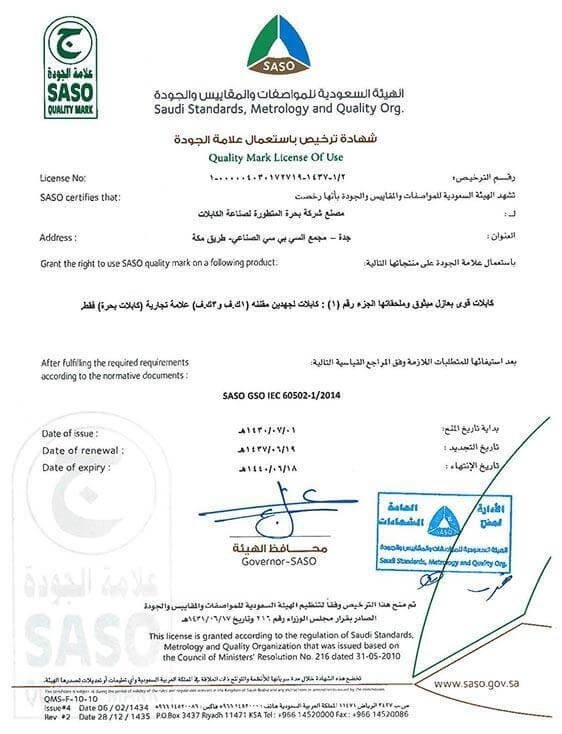
A PCoC usually includes the name and model of the certified product, the relevant SASO technical regulation and standard, the HS classification, details about the manufacturer, the Conformity Assessment Body that issued it, a unique certificate number, and the issue/expiry date—often accompanied by a QR code or reference number that Saudi authorities can check directly on SABER.
An SCoC typically shows a reference to the linked PCoC, the specific shipment’s invoice and packing list details, the importer’s information, and its certificate number tied to that consignment only.
Because certificates are issued and verified electronically through SABER, the platform itself—not a PDF someone emails you—is the authoritative record. If a certificate can’t be verified against a SABER reference number, that’s a red flag worth investigating before goods ship.
Documents You’ll Need
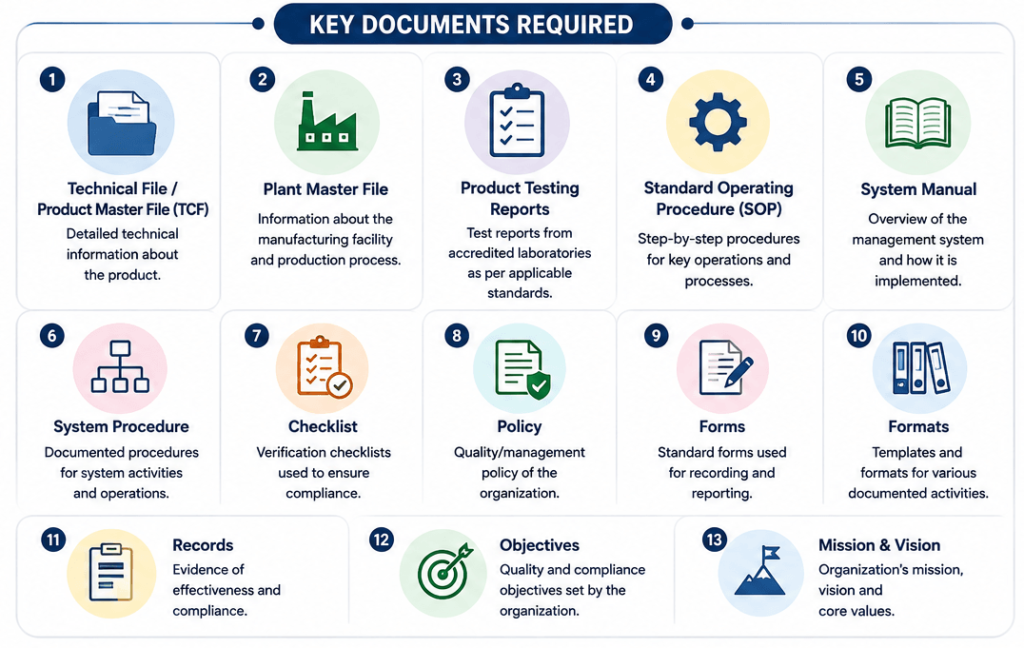
For the PCoC:
- Accredited lab test reports matching the required Saudi standard
- Product photographs showing labeling and markings clearly
- Arabic labeling artwork where required
- Manufacturer’s Declaration of Conformity
- Technical specification/datasheet
- Manufacturer and, where relevant, ISO 9001 documentation
For the SCoC (per shipment):
- Commercial invoice
- Packing list
- Reference to the valid PCoC
- Any additional product-declaration documentation required for specific HS code categories
Exact document lists vary by product category and applicable technical regulation, so it’s worth confirming the full requirement list at the classification stage rather than assuming a generic checklist covers your product.
Timeline and What Affects It
Industry experience across most product categories puts a first-time PCoC and SCoC at roughly 2–3 weeks end-to-end when documentation is complete and no new testing is required. That breaks down roughly as
Stage
Typical duration
Classification
A few working days
Testing (if needed)
About a week
PCoC issuance
A few working days after a complete file
SCoC issuance
Same day to next working day
This timeline stretches considerably if the product needs new testing, falls into a category requiring a factory audit, or needs SFDA/CST/SQM involvement alongside SABER. Products regulated by the Saudi Food and Drug Authority (like food, cosmetics, and medical devices) and wireless products that need approval from the Communications, Space, and Technology Commission (CST) go through different, usually longer, processes that are not part of SABER.
What Drives the Cost
There’s no single published fee for “SASO certification”—cost depends on too many variables to quote a fixed number honestly. The main drivers are
- The product risk category and the applicable technical regulations are important factors.
- Whether new testing is required or existing IEC/CB reports can be reused
- Number of product models/variants being certified
- Whether a factory audit applies (common for higher-risk categories and SQM)
- Conformity Assessment Body and laboratory fees
- Per-shipment SCoC charges for ongoing consignments
If a quote you’ve received doesn’t account for at least classification, CAB fees, and per-shipment costs separately, ask what’s actually included before treating it as a total.
Common Mistakes
- Searching for a standalone “SASO certificate.” It leads applicants to outdated guidance instead of the correct PCoC/SCoC route.
- Shipping before the PCoC is confirmed. Without it, there’s no way to issue a valid SCoC, and the shipment is held.
- Filing the SCoC application after the goods have shipped. It needs to be requested and issued in advance, not reactively.
- Misclassifying the HS code. This misroutes the entire application to the wrong technical regulation.
- Assuming non-regulated products need no certification. They still require SABER processing, typically via self-declaration.
- Letting the PCoC lapse mid-shipping cycle. An expired PCoC blocks new SCoCs immediately, with no grace period.
How Markek Supports You
Markek International Certifications is an SASO-approved certification body, accredited for product certification under ISO/IEC 17065 and inspection under ISO/IEC 17020. We handle:
- We provide classification and route mapping services, which include confirming your HS code, applicable technical regulations, and the exact certification path before any expenses are incurred.
- Accredited lab coordination—matching your product to a laboratory whose accreditation scope genuinely covers your standard
- PCoC and SCoC management—preparing the technical file and managing certificate issuance alongside your Saudi importer’s SABER account
- SFDA, CST, and SQM coordination is required for products that need certifications beyond SABER.
If you’re not sure which certification route your product actually needs, that’s the right first question to ask before spending on testing.
Book a free compliance audit, and we’ll confirm your exact certification path within one working day.
Final Takeaway
“SASO certification” is a useful shorthand, but the mechanics behind it are what actually matter: a PCoC that proves your product meets the applicable SASO standard and an SCoC issued for every shipment, both managed through the SABER platform. Get the classification right at the start, keep the PCoC current, and file the SCoC before the goods move—and the rest of the process is largely procedural.
FAQs ( Frequently Ask Questions)
Is “SASO certification” still a real certificate? SASO certification is no longer a standalone document. SASO sets the technical regulations, but compliance today is demonstrated through a Product Certificate of Conformity (PCoC) and Shipment Certificate of Conformity (SCoC) issued via the SABER platform.
What’s the difference between SASO and SABER? SASO is the regulatory authority that writes Saudi Arabia’s technical standards. SABER is the electronic platform SASO uses to run certification, from product registration through certificate issuance.
How do I get a COC certificate for Saudi Arabia? Start with product classification to confirm your HS code and applicable technical regulation, complete testing if required, submit your technical file to a SASO-approved Conformity Assessment Body, and receive your PCoC—followed by an SCoC for each shipment.
Who owns the SABER account—me or my importer? The Saudi importer owns the SABER account, as only a company with a Saudi Commercial Registration is eligible to open one. Foreign exporters supply the technical documentation their importer or certification partner submits.
How long does SASO/SABER certification take? Roughly 2–3 weeks for a first PCoC and SCoC when documentation is complete and no new testing is required. Factory audits, additional testing, or SFDA/CST involvement extend the process.
Please clarify what an SABER certificate actually looks like. Both the PCoC and SCoC are electronic records on the SABER platform, showing the product/shipment details, applicable technical regulation, certifying body, and a verifiable certificate number—rather than a physical paper certificate in the traditional sense.
Do non-regulated products need certification too? Yes. Non-regulated, lower-risk products generally still need to be processed through SABER via self-declaration before they can clear Saudi customs.
What happens if I ship without a valid SCoC? The shipment is typically held at Saudi customs, since clearance requires a valid SCoC referencing an active PCoC. Certifying after the goods have shipped doesn’t resolve the issue.