
IS Standard Testing + BIS-Recognised Lab
Technical foundation
Global Market Access India BIS CRS
For notified electronic and IT products sold in India, manufacturers must obtain BIS Compulsory Registration Scheme (CRS) registration before import, sale or distribution. The route starts with testing to the applicable Indian Standard (IS) at a BIS-recognised laboratory. BIS then grants registration, allowing the product to display the Standard Mark with its unique R-number. Foreign manufacturers must also appoint an Authorized Indian Representative (AIR).
Technical foundation
Registration outcome
Current mandatory scope
Scope is set by the relevant ministry notification and BIS CRS product list, and may change as products or standards are added or revised. Timing depends on the product and completeness of the test report and application.
At a Glance
BIS CRS Registration, also searched as BIS CRS Certification, is mandatory for products notified under the Compulsory Registration Scheme. Under BIS Scheme II (CRS), the manufacturer has the product tested to the applicable Indian Standard (IS) at a BIS-recognised laboratory, then applies to the Bureau of Indian Standards. Once approved, BIS grants a licence to use the Standard Mark with a unique R-number.
Not every electronic product is automatically covered. First, check whether the exact product category and Indian Standard appear in the current compulsory registration requirements. A notified product cannot be manufactured for sale, imported, sold or distributed without meeting the applicable standard and carrying the BIS Standard Mark and registration number.
How Markek helps: We check CRS applicability, identify the right Indian Standard, coordinate product testing and manage the BIS registration process.
Overview
BIS CRS is the Compulsory Registration Scheme of the Bureau of Indian Standards (BIS). It applies to notified products, mainly specified electronics and IT goods. The manufacturer has the product tested to the applicable Indian Standard (IS) for its relevant safety and conformity requirements, then submits a self-declaration, test report and supporting documents to BIS.
After approval, BIS grants registration and a licence to use the applicable BIS Standard Mark with a unique registration number (R-number). A notified product needs this registration and marking before it can be imported, sold or distributed in India.
The two schemes should not be confused.
The ISI Mark follows the Scheme I certification route, which includes product assessment and factory inspection under the applicable scheme.
CRS mainly covers notified electronics and IT products. It is based on product testing, the manufacturer’s self-declaration and BIS registration.
Who Needs It
BIS CRS registration is manufacturer-based. The manufacturer of a product covered by CRS applies for registration, whether its factory is in India or abroad. The registration scope is tied to the manufacturer, manufacturing location, product and brand.
Indian and foreign manufacturers of notified products can apply for CRS registration.
The same product made at different manufacturing locations needs separate registration for each location.
Different brands made at the same location require separate registration numbers under BIS CRS.
Importers, brand owners and OEMs may coordinate the compliance work, but the CRS application and registration remain with the manufacturer and its approved product, factory and brand scope.
CRS and FMCS are different routes. BIS CRS registration follows Scheme II. The Foreign Manufacturers Certification Scheme (FMCS) is used for applicable Scheme I / ISI Mark products.
Product Scope
BIS CRS covers a wide range of notified products, particularly in the electronics, IT, audio-video, lighting and electrical sectors. Examples include:
Process
The BIS CRS registration process starts with confirming product applicability and model scope, followed by testing and submission of the registration application.
Scheme II is based on product testing and self-declaration of conformity. Unlike Scheme I, it does not normally require a pre-grant factory assessment.
Confirm whether the product is notified under CRS and identify the relevant Indian Standard (IS), Essential Requirement (ER), or both.
Define the models, series and brand to be covered. Check the applicable grouping rules before selecting samples for testing.
Generate the test request through the CRS system and select a BIS-recognised laboratory that covers the applicable standard and product.
Have the selected sample evaluated against the applicable requirements. Check that the report correctly identifies the model, brand, manufacturer and factory. Failed parameters may require corrective action and retesting.
Submit the test report, product and manufacturer details, self-declarations and supporting documents. Foreign manufacturers must also meet the applicable Authorised Indian Representative (AIR) requirements.
BIS reviews the application and evidence. Respond to any queries or document discrepancies with the requested information within the stipulated time.
When BIS grants registration for the approved product, brand, models and manufacturing location, the manufacturer may use the applicable Standard Mark with its unique R-number.
Keep the product conforming to its approved scope. Manage model additions, product changes, marking, annual obligations and renewal under the applicable CRS rules.
Documentation
The exact BIS CRS document checklist depends on the manufacturer, product, brand and manufacturing location. General documents and information may include:
Cost
There is no fixed BIS CRS certification cost for every product. The total depends on the product category, applicable Indian Standard, number of models, testing requirements, test reports and manufacturer location.
Timeline
The timeline for BIS CRS registration varies by product and application. It depends mainly on the following factors:
Markek can provide an indicative CRS project roadmap after reviewing your product and proposed model scope.
Common challenges
Several CRS delays come from decisions made before the application is submitted.
Confirm the notified product category and applicable Indian Standard before testing.
Review the applicable model grouping or series guidelines before selecting the test sample.
Check the manufacturer name, factory address, brand and model details before submission.
Confirm whether the models meet the applicable grouping requirements before testing and filing.
Complete the application within the permitted validity period of the test report.
Appoint the required Authorized Indian Representative (AIR) and complete the supporting documentation before filing.
Review each observation carefully and submit consistent supporting documents and test-report details.
Check whether a model-inclusion or scope-extension application is required before placing the model under the existing registration.
Markek support
Markek helps manufacturers manage the BIS CRS registration process from initial applicability check to final registration and ongoing compliance.
Why Markek
BIS CRS registration requires accuracy from the beginning. Errors in product classification, model scope or test-report details can lead to additional testing, queries and delays. Markek brings a practical, product-focused approach to the certification process.
BIS CRS is the Compulsory Registration Scheme under Scheme II, under which BIS grants a licence to use the Standard Mark on the basis of product conformity and self-declaration supported by the specified testing route.
Yes, for products specifically notified under the applicable compulsory-registration requirements. Products outside the notified scope may not require CRS.
BIS CRS covers notified products including many electronics and IT goods, solar photovoltaic products and certain other product categories notified under Scheme II.
The manufacturer applies for the licence. Importers and brand owners may coordinate the process but should correctly identify the actual manufacturer and factory.
Yes. Foreign manufacturers can apply for CRS and may need to appoint an Authorized Indian Representative (AIR) in accordance with BIS requirements.
No. BIS specifically states that FMCS applies to foreign manufacturers except Electronics & IT Goods notified by MeitY, which follow CRS where applicable.
Yes. The manufacturer must establish conformity through the applicable testing route and submit the required test report with the CRS application.
Potentially, depending on the applicable product grouping or series guidelines. The models should be reviewed before the testing and application strategy is finalised.
Under Scheme II, routine pre-grant factory inspection is generally not part of the registration process. CRS is primarily based on product testing and self-declaration of conformity.
BIS may still carry out surveillance or other compliance activities after registration as permitted under the scheme.
Under the current CRS application instructions, the test report should generally be not more than 90 days old at the time of online application submission. Manufacturers should therefore plan the registration application soon after product testing is completed.
A BIS Scheme-II licence may be granted initially for up to five years and may be renewed for a further period of up to five years, subject to the applicable requirements and annual fees.
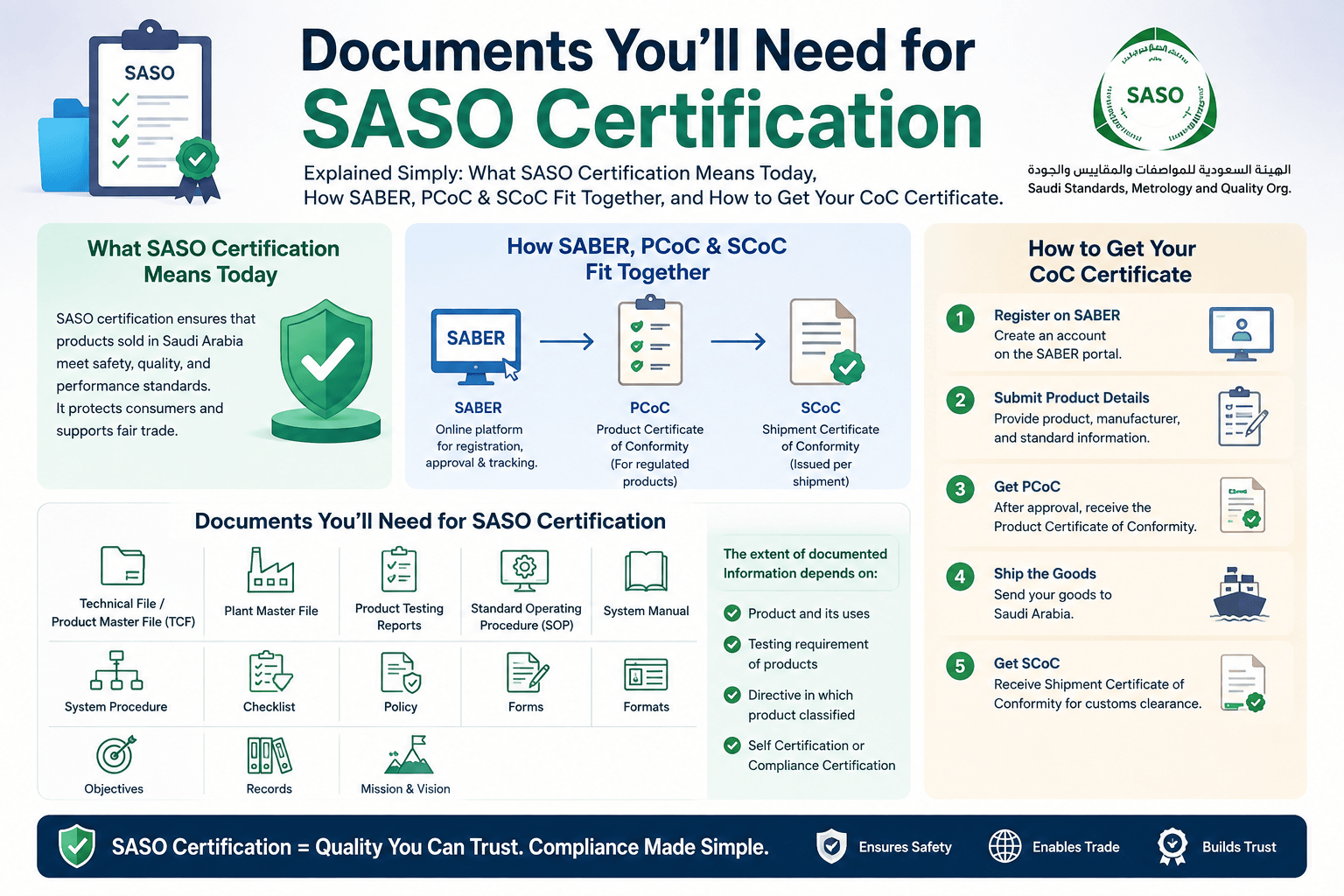
Most people who search for "certification SASO" have already lost time. A...

Most exporters believe global expansion fails because markets are difficult to enter.That’s...
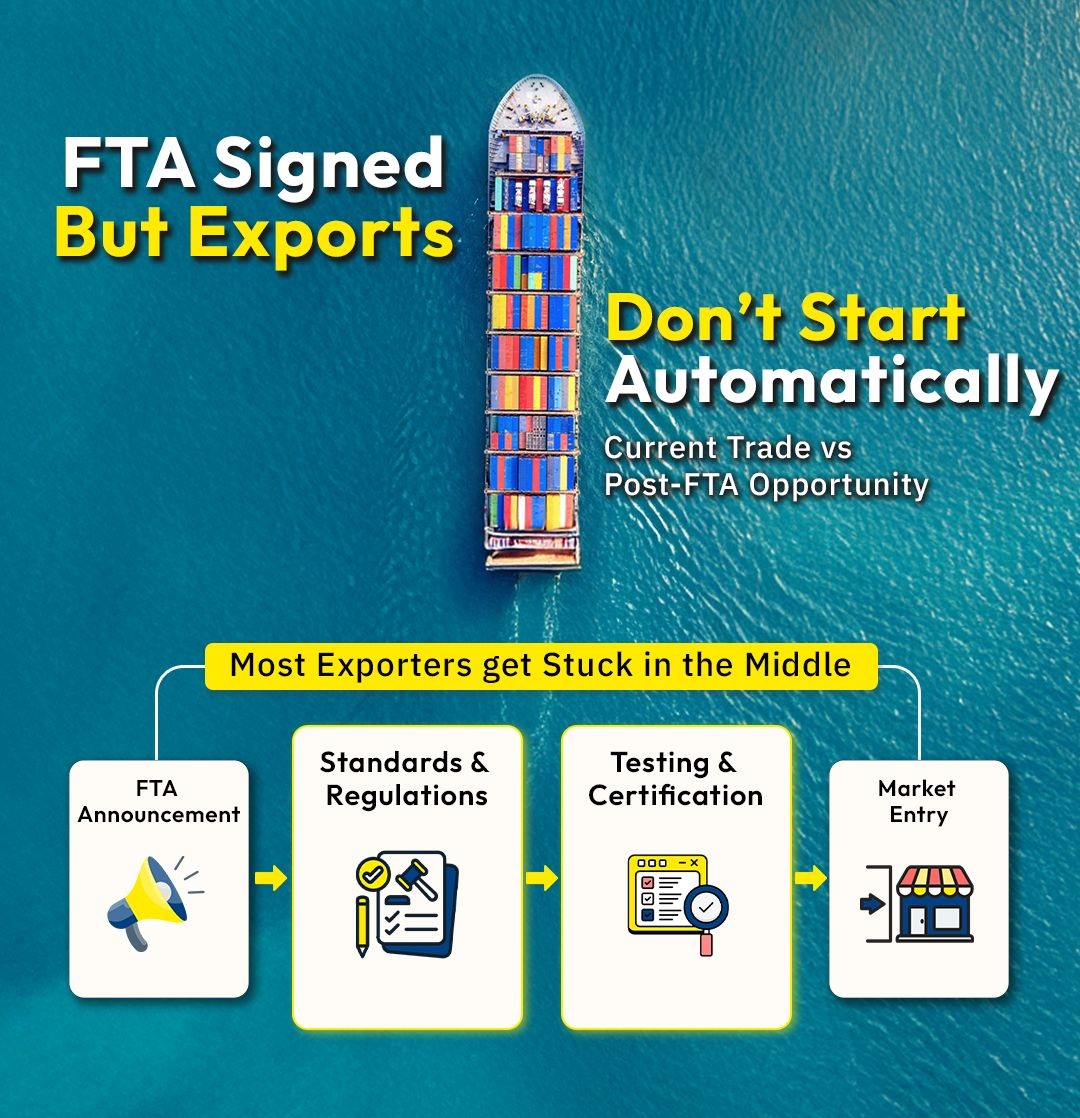
In today’s rapidly evolving global trade landscape, new FTA agreements are being...
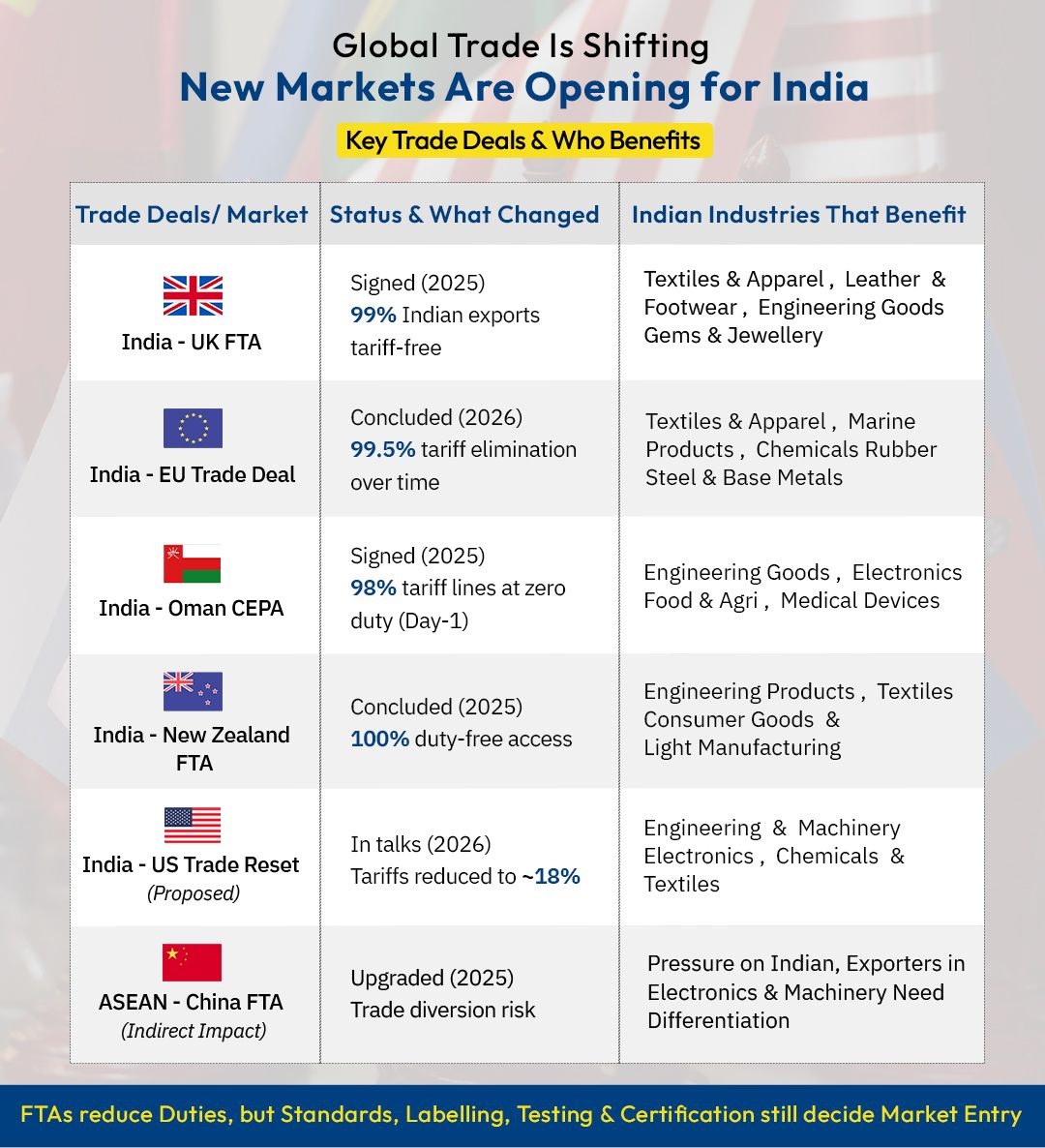
Tariffs Are Falling—But 90% of Indian Exporters Still Can’t Enter Global Market...

Trade policy sounds boring until it shows up in real life. Until...

Introduction A sort of conformity assessment known as CB certification verifies that...

How would you go about requesting an SASO Certificate of Conformity? If...

Overview of the Saber Certificate Companies registered in the Kingdom of Saudi...

Introduction International commerce is vital to the economies of many countries in...

How much does the Saber Certificate cost Recognizing the Saber Certificate Cost...