“CST Type Approval” is the common term used for Saudi approval of applicable communications and ICT equipment. CST’s Equipment Licensing System includes Device Approval to assess conformity with CST technical specifications and a Certificate of Conformity (CoC) service for equipment that has already been approved and verified. CST was formerly known as CITC, which is why searches for “CITC certification” or “CITC approval” still refer to the same Saudi regulator.
CST Type Approval for Saudi Arabia (formerly CITC)
CST Type Approval
Saudi Arabia · Communications & ICT Equipment
CST Type Approval for Saudi Arabia (formerly CITC)
CST, formerly CITC, issues approval for different wireless, radio, and telecommunications equipment entering Saudi Arabia. The product, its RF or telecom functions, and the applicable Saudi technical requirements will suggest the final approval route. Markek helps identify the correct route, review test evidence, and coordinate approval before shipment.
- CST Approval
- For Applicable ICT Equipment
- RF + Telecom
- Technical Requirements
- CST + SABER
- Route Depends on Product
Quick Summary
AT A GLANCE
CST Type Approval, Briefly
On this page, you’ll understand the following:
- Which products may require CST approval
- Device Approval vs CST Certificate of Conformity
- How CST and SABER requirements connect
- Which test reports may support the application
- Current Saudi ICT requirements manufacturers should know
Overview
Overview
How Does CST Type Approval Work?
The Communications, Space and Technology Commission (CST) regulates communications and ICT equipment in Saudi Arabia. Through its Equipment Licensing System, manufacturers and importers can confirm whether equipment complies with CST technical specifications before it is manufactured, imported, or placed on the Saudi market.
The system includes several different services:
Device Approval
Evaluates a device against CST technical specifications.
Certificate of Conformity
Available for devices already approved and verified as conforming.
Customs Clearance Permission
Applies to certain restricted ICT equipment.
Device Registration
For applicable equipment already released by CST.
Who Needs It
Who Needs CST Type Approval?
- Manufacturers of wireless, RF equipment, IoT, connected devices, telecom, and networking equipment
- Exporters supplying ICT equipment to Saudi Arabia
- Saudi importers and distributors
- Brands adding Wi-Fi, Bluetooth, cellular, or other RF functionality to products
By Product Type
Which Products May Need CST Type Approval?
Common products that should be checked for CST requirements include:
| Product Type | CST Applicability | Why |
|---|---|---|
| Mobile phones & tablets | Typically in scope | Cellular, Wi-Fi, Bluetooth |
| Routers & Wi-Fi equipment | Typically in scope | Wireless/network functionality |
| Bluetooth headphones & speakers | Typically in scope | RF communication |
| IoT & smart-home devices | Typically in scope | Wireless connectivity |
| Smartwatches & wearables | Typically in scope | Bluetooth, Wi-Fi, or cellular |
| Telecom/network equipment | Check CST route | Connects to communications networks |
| Appliances with wireless functions | Check applicability | Integrated RF feature |
| Wired products with no ICT/telecom function | May fall outside scope | No relevant RF or telecom function |
CST + SABER
How Do CST and SABER Requirements Work Together?
CST and SABER can both be relevant to ICT products, but they should not be understood as simply:
“CST covers the radio; SABER covers everything else.”
The actual route depends on the product, HS classification, technical functions, and the Saudi regulation that applies.
| CST | SABER / SASO |
|---|---|
| Regulates communications and ICT equipment | Manages product conformity under applicable Saudi technical regulations |
| Uses CST technical specifications | Uses the applicable SASO technical regulation |
| Includes Device Approval and CST CoC services | Can involve product and shipment conformity routes |
| Focuses on applicable ICT/telecom requirements | May cover wider product requirements |
Saudi Arabia now has a dedicated Technical Regulation for Communications and Information Technology Devices. Depending on the product and HS code, the conformity route may involve CST requirements, SABER requirements, or a connected CST/SABER process.
Regulatory Framework
Process
Process
The CST Type Approval Process
A clear six-step route from initial applicability review through approval and import preparation.
-
Confirm Applicability
Review the features of the device, wireless technology used, frequency band, HS classification, and applicability of CST and/or SABER requirements.
-
Technical Requirements Identification
Identify the CST standard and specifications applicable to RF, EMC, safety, SAR/RF exposure, and other technical parameters.
-
Review International Test Reports
Determine whether the international test reports meet Saudi technical requirements. If gaps are identified, additional testing will be required.
-
Preparation of Technical File
Collect the product specifications, model and RF details, manufacturer details, test reports, manuals, product images, and labeling information.
-
Complete the Applicable CST Route
Submit for Device Approval and complete the applicable CoC or connected Saudi conformity requirements where needed. CST allows parties inside or outside Saudi Arabia to apply for Device Approval.
-
Prepare for Import
Confirm any SABER, customs-clearance, equipment-registration, or separate spectrum requirements before shipment.
Documents
Documentation
Documents Required
The exact file depends on the device but commonly includes:
Product & Manufacturer
- Product name, model, and variants
- Manufacturer details
- Technical specifications and datasheet
- Product photographs
- Labeling artwork
Radio & Technical Details
- Wireless technologies used
- Operating frequency bands
- RF output power
- Antenna information where relevant
Reports & Supporting Evidence
- RF / telecom test reports
- EMC and electrical-safety reports
- SAR or RF exposure evidence where applicable
- User manual or installation documentation
- Existing international test reports where applicable
Timeline & Product Scope
How Long Does CST Approval Take?
There is no single practical project timeline for every device. It varies depending on the following:
Timeline factors
What can affect the schedule?
- Whether the product is clearly within CST scope
- Availability of suitable test reports
- Number of RF technologies and frequency bands
- Model and variant differences
- Whether additional testing or clarification is needed
- Whether SABER or other Saudi requirements also apply
Current Requirements
Current Saudi ICT Requirements
Two developments are particularly important for manufacturers in 2026.
Updated ICT standard
SASO 3114:2026
SASO has replaced SASO CITC GEN-002 in the ICT Technical Regulation with SASO 3114:2026 — Requirements for Specific ICT Equipment.
Grace period ends
New certificates
GEN-002 discontinued by
Charging-port requirements
USB-C / Charging-Port Requirements
Effective from
Updated charging-port requirements apply to specified products, including wireless routers, portable speakers, digital cameras, keyboards, mice, e-readers, and portable navigation systems.
Relevant products must meet the applicable SASO IEC 62680 requirements.
Cost
What Determines CST Type Approval Cost?
The total project cost depends on:
Project variables
Key Cost Drivers
- Number of models and variants
- Wireless technologies and frequency bands
- Availability of suitable RF, EMC, safety, and SAR reports
- Additional testing requirements
- Applicable CST approval / CoC route
- SABER or other Saudi conformity requirements
- Technical changes between international and Saudi models
Common Mistakes
Common CST Type Approval Mistakes
Avoid these frequent issues when planning testing, approval, and import preparation for Saudi Arabia.
-
Assuming every wireless product follows the same route
CST applicability depends on the equipment and technical function.
-
Using CE or RED as a substitute for CST approval
International reports may support the file but do not replace Saudi requirements.
-
Using outdated technical specifications
Current evidence should be checked against standards such as SASO 3114:2026 where applicable.
-
Wrong HS or product classification
This can send the product into the wrong CST/SABER conformity route.
-
Model mismatch
The approved evidence should match the exact product and variant being shipped.
-
Ignoring frequency differences
A product designed for another market may operate differently from the Saudi version.
-
Assuming CST automatically completes SABER
The required combination depends on the technical regulation and HS code.
-
Missing separate spectrum licensing
Certain special radio equipment may require an additional frequency-related authorization.
Markek Support
How Markek Supports Your CST Type Approval
Markek supports manufacturers, exporters, and Saudi importers through the CST equipment-compliance process.
Scope, Applicability, and Technical Requirement Mapping
We review the product, RF functions, frequency bands, and HS classification to determine whether CST and SABER requirements apply. We identify the relevant CST specifications and current Saudi standards before testing begins.
Test Report Gap Review
We assess existing CE/RED and international test evidence and identify only the additional testing needed for the Saudi route.
Device Approval & CoC Coordination
We prepare the technical documentation and coordinate the applicable CST Device Approval and conformity process.
CST + SABER Alignment
Where both systems apply, we help align the documentation and conformity route before shipment.
Frequently asked questions
What is CST Type Approval?
CST Type Approval” is the commonly used term for Saudi approval of applicable communications and ICT equipment. CST’s current Equipment Licensing System includes Device Approval and Certificate of Conformity services.
Is CST the Same as CITC?
Yes. CITC was the former name of the regulator. On November 10, 2022, its name changed to the Communications, Space, and Technology Commission (CST). “CITC certification” and “CITC approval” remain common legacy search terms.
Which Products Require CST Type Approval?
Applicable wireless, RF, telecommunications, and ICT equipment should be checked. Common examples include mobile devices, routers, Wi-Fi products, IoT equipment, Bluetooth devices, and telecom equipment. The exact requirement depends on the product’s technical functions.
Is Device Approval the Same as a CST Certificate of Conformity?
No. Device Approval determines whether equipment conforms to CST technical specifications. The Certificate of Conformity service is available for equipment that has already been approved and verified as compliant.
Do I Need Both CST and SABER?
The correct route completely depends on the product, its HS code, RF/telecom functionality, and applicable regulation. For example, some ICT products fall under Saudi technical regulations, which are managed through SABER and also have CST requirements.
Can I Use Existing CE or RED Test Reports?
Often, yes, as supporting technical evidence. Reports should cover the applicable CST requirements, frequency bands, model, and technical configuration. CE/RED documentation does not itself replace CST approval.
What is SASO 3114:2026?
SASO 3114:2026 replaces the older SASO CITC GEN-002 specification for applicable ICT equipment. Manufacturers relying on older test evidence should review it against the updated requirements before new conformity certificates are issued.
Does a Wired-only Device Need CST Approval?
Not automatically. A standard wired product with no relevant telecommunications or ICT function may fall outside CST equipment approval. However, wired telecom or networking equipment may still be in scope, so functionality should be checked.
Can Radio Equipment Need a Separate Frequency License?
Yes. Certain special radio equipment or equipment using licensed spectrum may require a separate CST radio-frequency authorization in addition to equipment conformity requirements.
What Happens if the Required CST Approval Is Missing?
The product may face import or customs-clearance problems and may not be legally placed on the Saudi market. CST, SABER, and any separate spectrum requirements should therefore be confirmed before the shipment is dispatched.
Top Certification


Other Saudi Certificates
News & Update
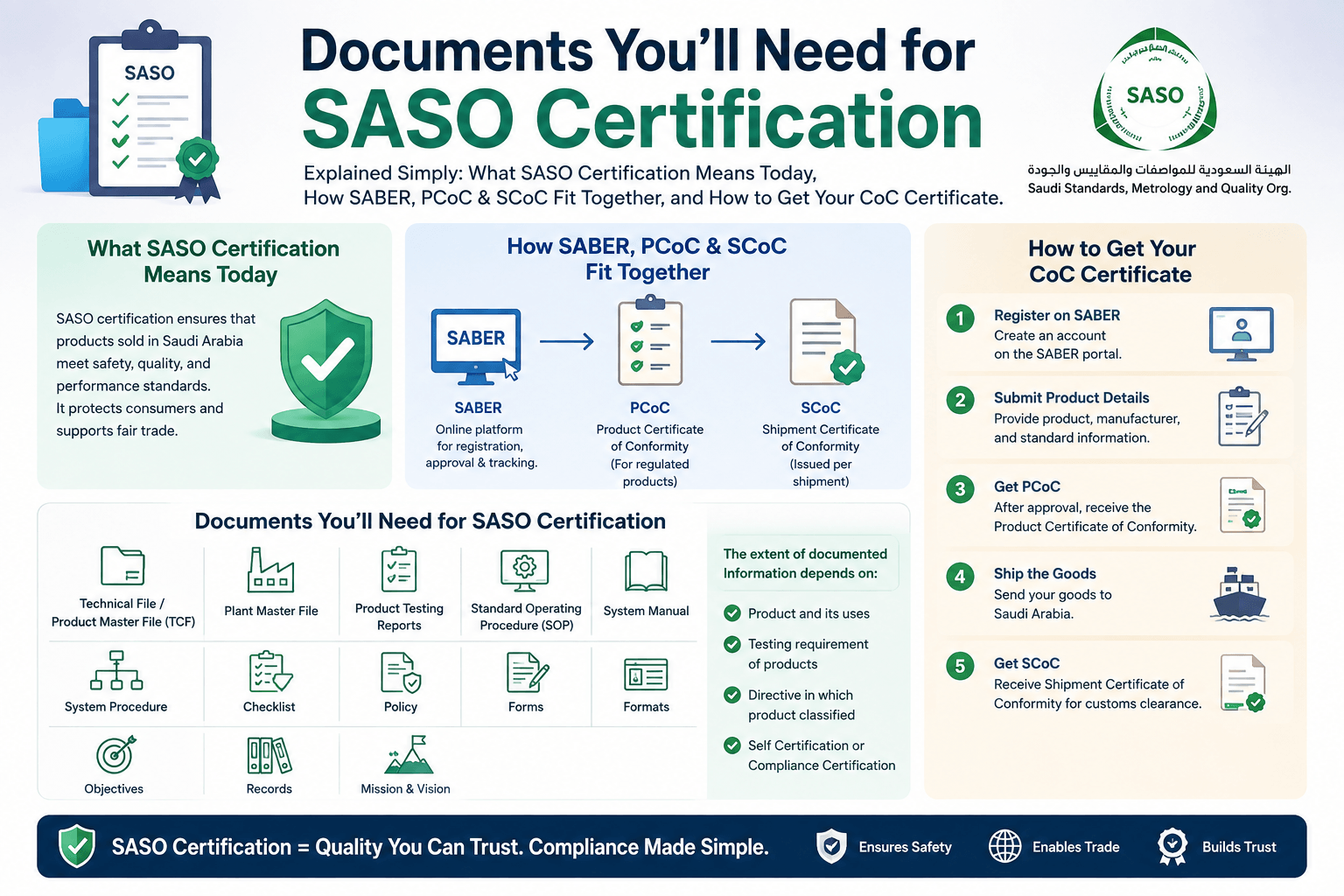
Certification SASO Explained: What It Is and How to Get Certified in Saudi Arabia
Most people who search for "certification SASO" have already lost time. A...

90% of Exporters Fail Globally—Because Their International Market Entry Strategy Is Broken
Most exporters believe global expansion fails because markets are difficult to enter.That’s...
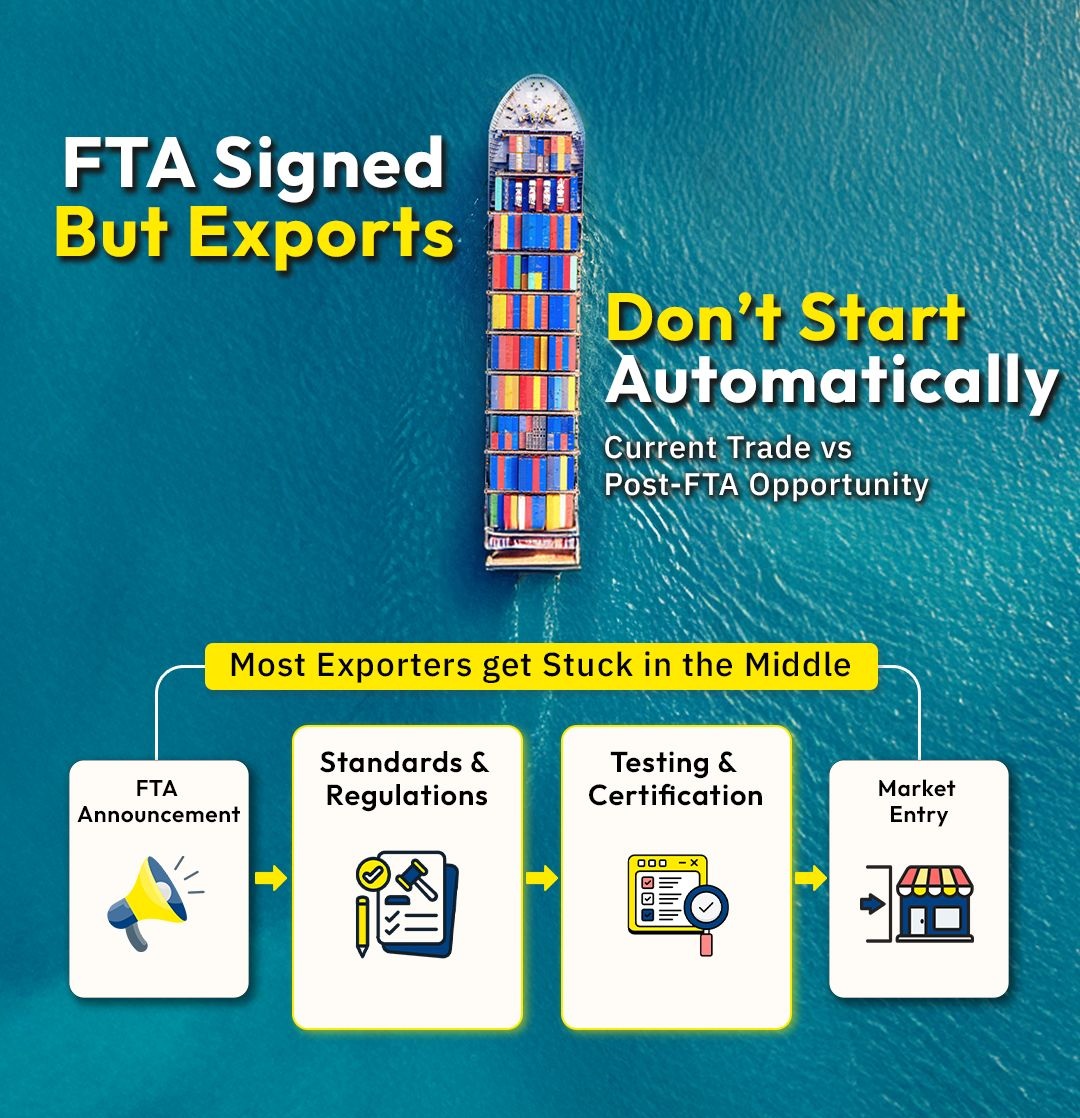
FTA Signed? Why Indian Exporters Still Struggle with Market Access
In today’s rapidly evolving global trade landscape, new FTA agreements are being...

Tariffs Are Falling—But 90% of Indian Exporters Still Can’t Enter Global Market Access. Here’s Why.
Tariffs Are Falling—But 90% of Indian Exporters Still Can’t Enter Global Market...

US Tariffs on Indian Goods: The Quiet Trade Tension No One Is Talking About
Trade policy sounds boring until it shows up in real life. Until...

What is the difference between CB Certification and CE certification?
Introduction A sort of conformity assessment known as CB certification verifies that...

How to apply for A SASO Certificate of Conformity?
How would you go about requesting an SASO Certificate of Conformity? If...

What is a Saber certificate used for?
Overview of the Saber Certificate Companies registered in the Kingdom of Saudi...

SASO Certification process: A Product Passport to Saudi Arabia
Introduction International commerce is vital to the economies of many countries in...

How much does the Saber Certificate cost: Ensuring Compliance in Saudi Arabia
How much does the Saber Certificate cost Recognizing the Saber Certificate Cost...
Need Guidance on Certification Requirements?
Connect with our specialists to identify which certifications your product needs and how to achieve them quickly and cost-effectively.