Non-VoC Products
Separate Iraq Route
Global Market Access Federal Iraq
Products outside Federal Iraq’s VoC Certificate of Conformity scope may follow the separate IQB scheme. For applicable shipments, the documents and goods are checked before a Certificate of Inspection (COI) is issued. IQB has product-specific exemptions, so the correct route should be confirmed before export.
Separate Iraq Route
Inspection Before Export
Issued Per Shipment
At a Glance
The Iraq IQB Scheme is a separate pre-shipment inspection program used for applicable goods that are not regulated under the Federal Iraq VoC program. The assessment is primarily based on documentary review and physical inspection, after which a Certificate of Inspection (COI) can be issued for the shipment. Some non-VoC products are exempt from IQB and remain subject to controls by COSQC, the Iraqi Ministry of Health, or other Iraqi authorities.
Overview
The IQB Scheme is Iraq’s pre-shipment inspection route for applicable consignments that do not fall under the Federal Iraq Verification of Conformity (VoC) program.
Current IQB program guidance identifies three important situations:
Who Needs It
The IQB route can be relevant to:
Which Route?
For most shipments, the starting distinction is whether the product falls within the Federal Iraq VoC scope.
Scroll sideways to compare the two routes.
| Comparison Point | IQB Certificate of Inspection | VoC Certificate of Conformity |
|---|---|---|
| Main Scope | Applicable goods outside the VoC program | Regulated products within the VoC program |
| Primary Assessment | Document review and physical assessment | Technical conformity, testing where required, and inspection |
| Product Testing | Not normally part of the standard IQB route | Can be required |
| Inspection | Yes | Yes |
| Output | Certificate of Inspection (COI) | Certificate of Conformity (CoC) |
| Per Shipment | Yes | Yes |
| Product Registration Route | No equivalent standard route | Route B is available for repeat VoC exports |
Applicability
No. Current IQB program guidance broadly covers goods outside the Iraq VoC program shipped to Central Iraq through official points of entry, but it also identifies specific exemptions.
The program lists certain products and shipment situations, including:
Process
Check that the product or ministry shipment is eligible for IQB and is entering through the appropriate route. Goods outside the Federal Iraq VoC scope are not automatically covered by IQB.
The exporter or importer submits the Request for Certificate (RFC) with available commercial and transport documentation. Current IQB guidance allows either party to apply.
The appointed assessment company reviews the shipment information and supporting documents. For ministry or government-related shipments, relevant contract specifications may also need review.
The goods are physically inspected before export. Current IQB guidance describes the inspection scope primarily as checking quantity and quality.
If the document review and inspection are satisfactory, the assessment can proceed to a COI. If requirements are not met, a Non-Conformity Report (NCR) can be issued instead.
For this consignment
The Certificate of Inspection (COI) is issued for the relevant consignment after a satisfactory assessment.
Documentation
The standard IQB file is relatively focused.
If the consignee is an Iraqi ministry or related administration with its own technical requirements, an extract from the contract showing those specifications must also be provided.
The exact file may also depend on:
Planning
The IQB route is generally more inspection-focused than the VoC process. The main practical timeline drivers are:
Plan the inspection before dispatch rather than leaving it until the shipping date.
The COI is shipment-specific. It applies to the consignment assessed under that certificate rather than creating a standing product registration.
Typical cost drivers include:
Current IQB guidance states that inspection fees are paid by the exporter. Additional visits or tasks can result in extra charges.
Common Mistakes
Some products are exempt and controlled separately by Iraqi authorities.
Applicable products outside VoC can still require a pre-shipment IQB COI.
Confirm the product route before testing or certification work begins.
The IQB scheme is primarily structured around applicable goods entering Central Iraq.
Products entering through Kurdistan are generally outside the standard Central Iraq IQB route.
Invoice, transport, product, and inspection information should remain aligned.
The goods must be available and ready before inspection can be completed.
The standard route is based primarily on document review and physical inspection; additional testing applies only where specifically required.
Markek Support
We review the product, HS code, destination, and point of entry to determine whether the shipment falls under IQB COI, Federal Iraq VoC CoC, an IQB exemption, or another Iraqi authority requirement.
We prepare the inspection file, review commercial and transport documents, and coordinate the pre-shipment inspection with the applicable Iraqi-authorized assessment company.
We help keep the product, invoice, transport, and inspection information aligned through COI issuance so avoidable document mismatches do not delay the shipment.
It is a shipment-specific Certificate of Inspection issued under the Iraq IQB Scheme after documentary review and physical inspection of applicable goods.
No. VoC covers regulated products requiring a Certificate of Conformity. IQB is a separate inspection route used mainly for applicable goods outside the VoC program.
No. IQB includes exemptions, and some products are controlled directly by COSQC, the Ministry of Health, or other Iraqi authorities.
Current IQB guidance allows the exporter or importer to submit the Request for Certificate.
Not normally under the standard scheme. Current guidance lists documentary review and physical inspection as the main assessment activities, with control testing generally not applicable.
The published IQB scope identifies quantity and quality as the main physical-inspection checks. Additional requirements can apply for ministry or contract-specific shipments.
Current IQB program guidance states that second-hand goods are allowed, subject to the scheme’s other eligibility, prohibited-product, and exemption rules.
Current IQB guidance states no minimum value for goods subject to the scheme.
Generally, the standard Central Iraq IQB route does not apply. Kurdistan shipments follow separate conformity arrangements, subject to limited ministry-related exceptions identified in the IQB guidance.
In case the result does not meet the requirements, the Non-Conformity Report (NCR) could replace the COI. The nonconformity must then be addressed before the shipment can proceed under the intended route.
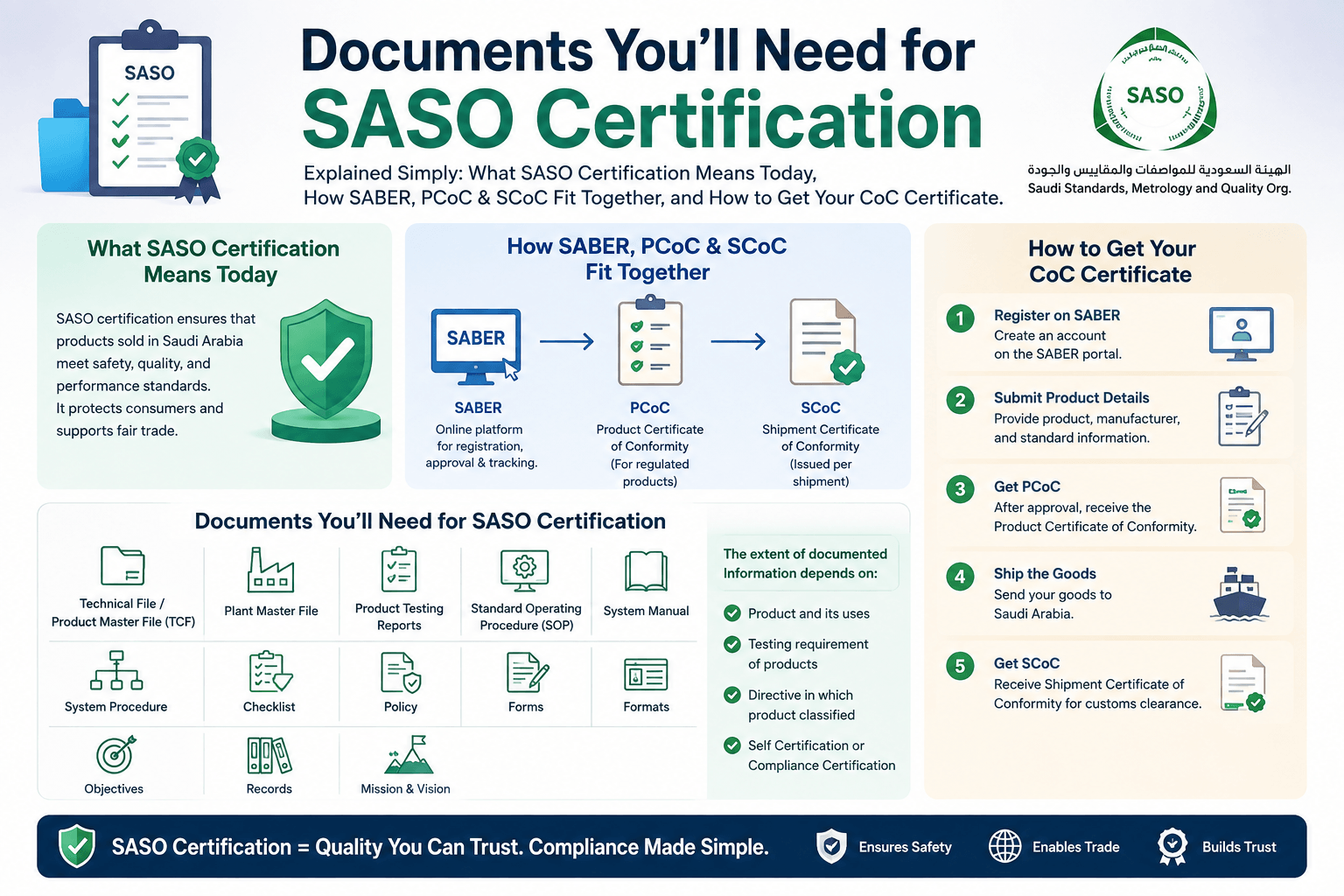
Most people who search for "certification SASO" have already lost time. A...

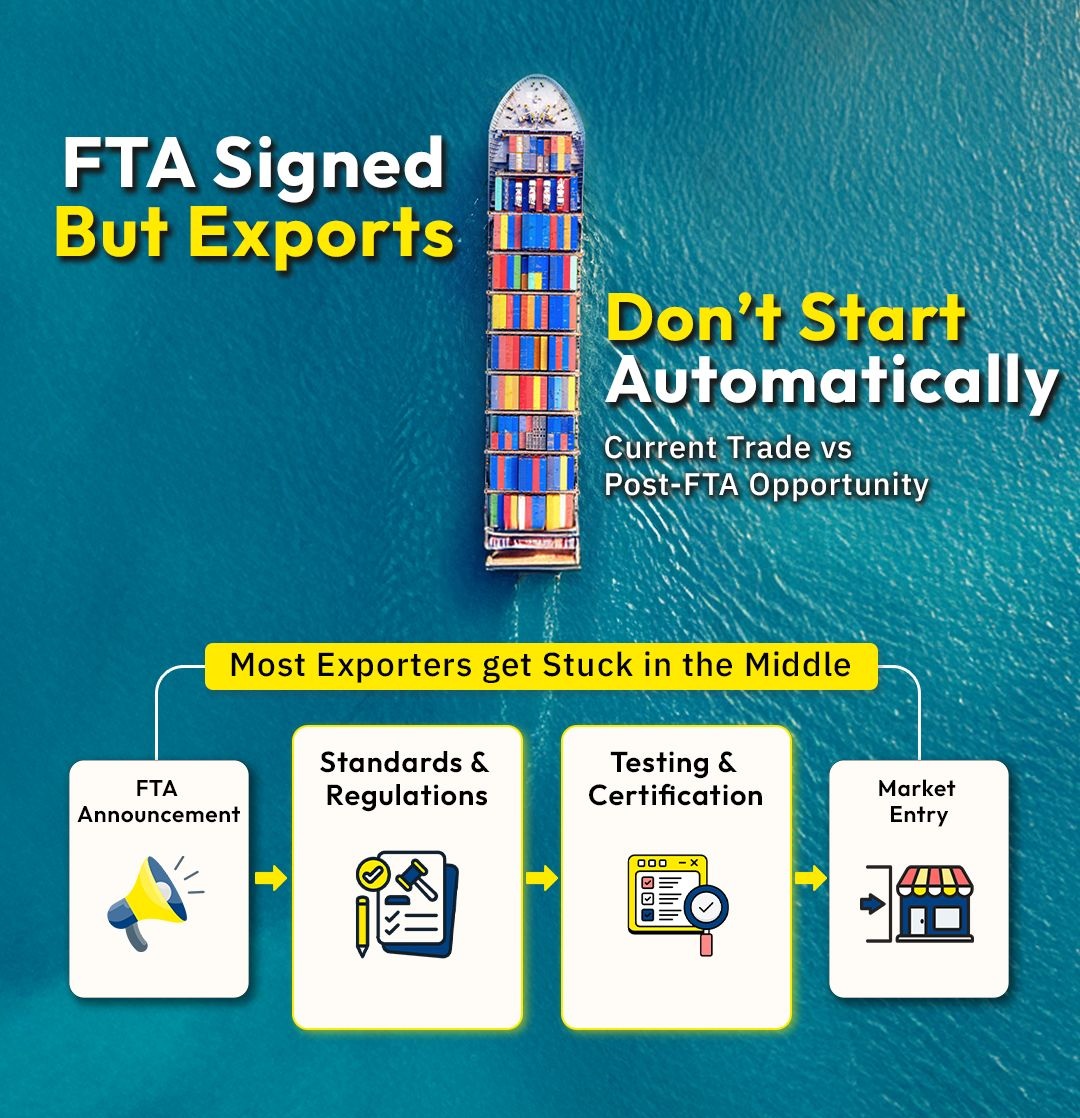
Most exporters believe global expansion fails because markets are difficult to enter.That’s...
In today’s rapidly evolving global trade landscape, new FTA agreements are being...
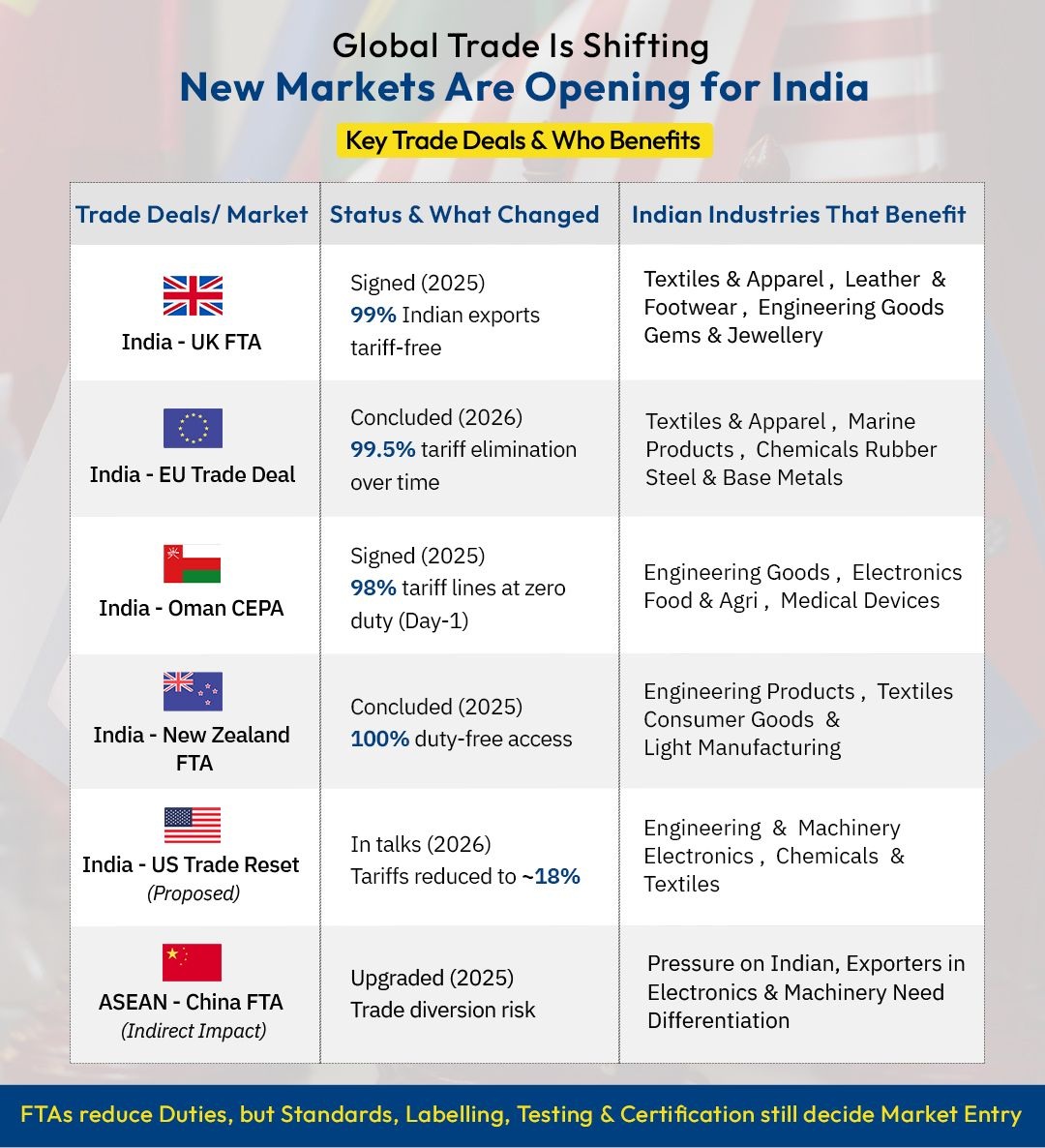
Tariffs Are Falling—But 90% of Indian Exporters Still Can’t Enter Global Market...

Trade policy sounds boring until it shows up in real life. Until...

Introduction A sort of conformity assessment known as CB certification verifies that...

How would you go about requesting an SASO Certificate of Conformity? If...

Overview of the Saber Certificate Companies registered in the Kingdom of Saudi...

Introduction International commerce is vital to the economies of many countries in...

How much does the Saber Certificate cost Recognizing the Saber Certificate Cost...